
—
Oh no! They will soon be shouting “Pendatang can balik Cina!”
—
Who can apply for the Chinese card…
—
China’s PR status is one of the hardest in the world to get.
PR status allows foreigners equal treatment as Chinese citizens. They can enter China without a visa and can invest, drive and enrol their children in schools without requiring further approvals or extra fees.
…
24 March 2017
In 2016, #China issued 1,576 permanent residency green cards to foreigners, increased 163%. China is needing more talents from the world.#PR


…
16 Nov 2016
…
 Arthur Hew
 China To Implement “Chinese Card” For Malaysians Born Chinese
.
Plan now is to build an Overseas Chinese Township between Meizhou City and Songkou. Meizhou City is same population to Georgetown but the district of Meizhou is 4 times larger than Singapore, so plenty of space to develop.
It is expected to attract million overseas Chinese migrate to this Overseas Chinese Town.
Private schools and a Malaysia/Singapore/Indonesia Food Street are part of the project in historical Songkou River Town. This Food Street is similar to the one on Sentosa Island of Singapore developed by Genting Berhad.
It is expected that Malaysian Chinese Developers will flock to that area to develop that designated area later. Short winter, low crime rate, low murder rate, low road accident, zero discrimination, least air pollution are attracting overseas born Chinese especially those from South East Asia.
Source : http://hk.on.cc/cn/bkn/cnt/news/20151212/bkncn-20151212181836679-1212_05011_001_cn.html
…
—
 Elise Hu (일리스 후)
Headed to #Beijing w @USTreasury sec Jack Lew thanks to an emergency visa from China‘s “close intimacy” consulate

—
December 17, 2015
COVERAGE
China To Implement “Chinese Card” For Malaysians Born Chinese
“No matter where the Chinese people are, China will always be their ‘maternal home’.” – President Xi Jinping

China to implement “Chinese Card” for overseas born Chinese including those from South East Asia.
South East Asia has the world largest overseas born Chinese. This is going to draw millions Chinese in South East Asia especially those from Indonesia, Malaysia, Myanmar, Philippines, India, Mauritius, Vietnam migrate back to China.
150 to 80 years ago, 1.5 million Hakka Chinese left Songkou River Town going to Shantou en-route to South East Asia.
Plan now is to build an Overseas Chinese Township between Meizhou City and Songkou. Meizhou City is same population to Georgetown but the district of Meizhou is 4 times larger than Singapore, so plenty of space to develop.
It is expected to attract million overseas Chinese migrate to this Overseas Chinese Town.
Private schools and a Malaysia/Singapore/Indonesia Food Street are part of the project in historical Songkou River Town. This Food Street is similar to the one on Sentosa Island of Singapore developed by Genting Berhad.
It is expected that Malaysian Chinese Developers will flock to that area to develop that designated area later. Short winter, low crime rate, low murder rate, low road accident, zero discrimination, least air pollution are attracting overseas born Chinese especially those from South East Asia.
Source : http://hk.on.cc/cn/bkn/cnt/news/20151212/bkncn-20151212181836679-1212_05011_001_cn.html
http://thecoverage.my/news/china-to-implement-chinese-card-for-malaysians-born-chinese/
—
 China Pictorial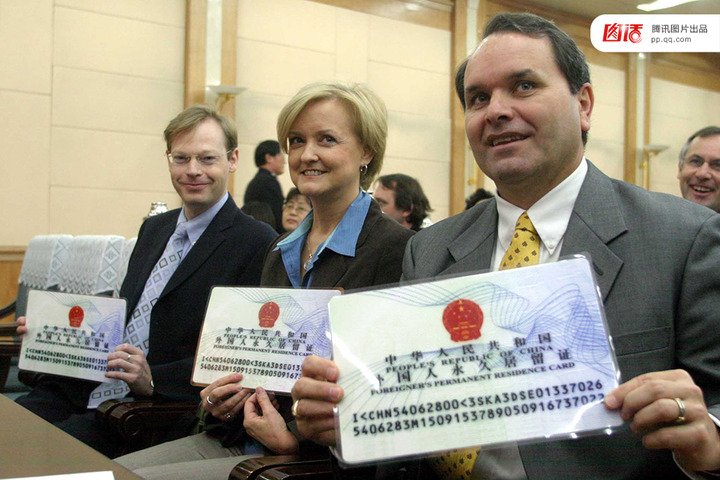
—
19 March 2016
Policymakers call for crackdown on illegal foreigners in China http://fb.me/7NYbvOy9x
Shanghaiist shared a link.

Lawmakers have said that more needs to be done to tackle the problem of an increasing number of foreigners who are illegally living and working in China.
According to the Global Times, National People’s Congress deputy Zhu Lieyu has called for stricter punishment on foreigners committing the “three illegals” of illegally entering, staying or working in China.
Speaking to journalists, Zhu said “The ‘three illegals’ should be listed as a crime and should attract stricter punishment. Some of these foreigners have occasionally caused trouble in civil society.”
Zhu is reported to have introduced a bill containing measures to better manage the problem, with one of the non-Communist political parties supporting moves towards enhanced supervision over visa agents and a speedier mechanism for repatriating illegal foreigners.
…
The move comes just months after a CCTV report called for the easing of measures to make it easier for foreigners to qualify for permanent residence in a bid to attract overseas talent and investment. Presumably they’re referring to the highly educated and well monied types.
Much of the rhetoric appears aimed at the foreign population residing in Guangdong province. “Guangzhou has a large number of foreigners who have illegally entered, stayed or worked. While those who work illegally can affect the local job market, some are even involved in criminal activities such as drug-dealing which could affect social stability.”
Just last month, authorities in Shenzhen launched a raid on an outdoor rave which saw 50 foreigners detained on charges of drug use.
http://shanghaiist.com/2016/03/19/call_for_crackdown_on_foreigners.php
—
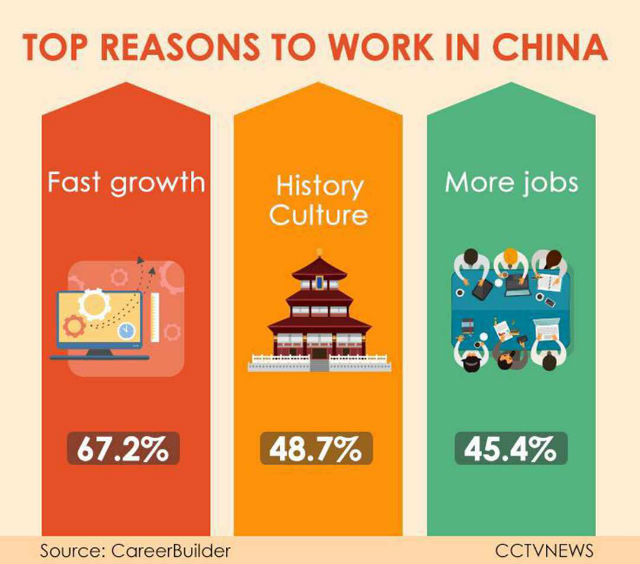
Between 2011 and 2015, 3 million foreign “experts” began working in China, an increase of 30 percent over the preceding five years according to official statistics.
http://shanghaiist.com/2016/01/23/china_wants_foreign_workers_foreign_money.php
—
China wants foreign workers and foreign money, plans to relax visa policies
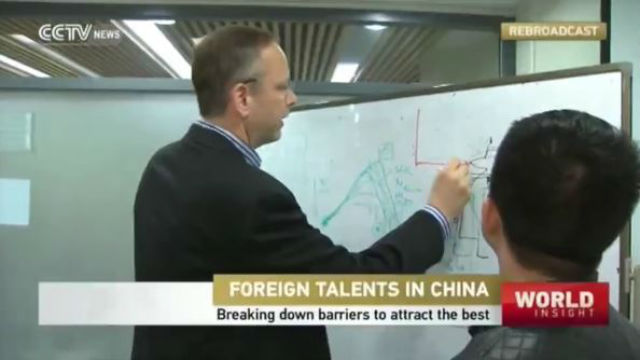
China plans to relax visa policies and make it easier for foreigners to qualify for permanent residence in a bid to attract overseas talent and investment.
According to CCTV, as well as making it easier to settle in China, the government plans to expand the social security system to cover foreigners, affording them the same retirement, unemployment, medical and maternity benefits enjoyed by Chinese citizens.
China’s Ministry of Public Security lists seven types of employment which allow a foreign resident to apply for a Chinese green card. These include working at national laboratories, engineering research centers, technology centers of state-accredited high-tech companies and foreign-funded R&D centers.
Applicants are still required to jump through several hoops. They must hold professional titles at or above associate professor or associate fellow and have four years of work experience in China.
A report by CareerBuilder, a US-based job website, said that close to 70 percent chose China because of its “fast development momentum” and “steady economic growth”.
http://shanghaiist.com/2016/01/23/china_wants_foreign_workers_foreign_money.php
—
19 March 2016
 China Xinhua News
Video: China is providing opportunities for both locals and foreigners alike living there. Click and find out why.
…
THE CHINESE DREAM
…
The Chinese Dream is multifaceted, embracing improved living standards, greater fairness with a crackdown on corruption, and a rising force for good in a changing international arena.
—
19 March 2016
—
Between 2011 and 2015, 3 million foreign “experts” began working in China, an increase of 30 percent over the preceding five years according to official statistics.
http://shanghaiist.com/2016/01/23/china_wants_foreign_workers_foreign_money.php
—
How many foreigners are there in China?
The figures below are from 2010.
In 2010, the population of China was 1.338 billion. Foreigners numbered 1.02 million.
| Major Figures on Residents from Hong Kong, Macao and Taiwan and Foreigners Covered by 2010 Population Census | |
| National Bureau of Statistics of China 2011-04-29 16:38:03 | |
|
—
21 February 2016
In China: ‘Yes’ to foreign talent, with PR made easier http://ebx.sh/24hl9a5

China is stepping up its game in the battle for global talent and investment with plans to make it easier for foreigners to obtain permanent residency (PR) status as growth in the world’s No. 2 economy sputters.
The application process will be made “simpler” with “more flexible, pragmatic and market-oriented” rules, according to a circular by the Communist Party’s Central Committee and the State Council. More industries will also be included in the scheme.
“Since the launch of the green card policy in 2004, it has contributed a lot to China’s development,” the directive said. “However, it has still lagged behind practical needs due to many disadvantages, including application requirements that are too high and too narrow in scope in issuing green cards.”
China’s PR permit, which was introduced in 2004, is widely thought to be one of the world’s most elusive. Only foreigners who worked in government departments or laboratories of “key national projects” are allowed to apply for it.
Last June, however, the rule was relaxed to include researchers at more institutes, including those with international funding.
The announcement on Thursday expands this further: Foreigners from “different industries” will also be eligible to apply, the circular said, without saying which ones.
Foreign investors keen on applying for PR will also likely have a lower threshold to meet under “pro-active” investment-based immigration policies. The minimum investment amount or timeframe, for instance, will be “adjusted flexibly” according to the needs of the economy, it added. Further details are expected in the coming months.
State Administration of Foreign Experts Affairs spokesman Gao Xiang said it highlights the role of the market in global talent recruitment: “More market factors would be taken into consideration when reviewing the candidates, such as salary, taxation and social credit.”
—
30 December 2015
…

China’s Pilot Green Card Plan to Attract More Overseas Chinese
China’s current “permanent residence permit” system or “China Green Card” was dubbed as “the world’s most difficult to apply.
Chinese government is prepare to accept overseas Chinese of Chinese origin resided in foreign countries by issuing “Chinese card”. These permanent residency card holders can enjoy basic rights, treatments and perks similar to local residents.
Up to now, the number of foreigners who obtained Chinese “green card” were only few thousands.
China issued only about 5,000 permanent residence permits between 2004, when the green card policy was introduced, and 2013, according to the Ministry of Public Security. This compared with about 600,000 foreigners living in the country.
China Overseas Chinese Affairs Office of the State Council via its Overseas Chinese network when reporting this news, wants to emulate the current practices in India as guidelines for implementation.
India had attracted many overseas talent after it launched the “Indian Card Plan (PIO)” and “Indian Overseas Citizen Pass Plan (OCI)”.
…
Unlock dual troubles to attract overseas Chinese talents

Chinese media reports the pilot project of “ethnic card” and future liberalization of dual nationality are in favor of globalization to attract overseas Chinese talents, capital, technology and at the same time to solve the problems of huge loss of professional out flux and investments.
If the dual nationality opened and implemented in future, overseas Chinese will be granted permanent resident status and will not lose Chinese nationality. With this pilot, overseas Chinese solidarity and their attractions toward China will be greatly enhanced. Their national identity will also be an unprecedented increase.
http://www.studyinchina.com.my/web/page/green-card-to-attract-more-overseas-chinese/
—
21 December 2015
The Economist
Big motherland
China’s principle of non-interference may not apply when ethnic Chinese are concerned
DEBATE still simmers about a remarkable intervention in the domestic politics of Malaysia late last month by China’s ambassador in Kuala Lumpur, Huang Huikang. A few days after the police had resorted to water cannon to disperse ethnic-Malay protesters shouting anti-Chinese slogans in the city’s Chinatown, he visited the area and made a statement calling for racial harmony. China “will not sit by idly”, he said, if its citizens’ rights are violated or Malaysian-Chinese relations damaged. The sentiments seem unexceptionable in themselves, if a bit puzzling, since the Chinese living there are almost all Malaysian citizens. But the public gesture seemed to flout the most hallowed tenet of Chinese foreign policy: not to interfere in other countries’ internal affairs. In fact, that principle has always had limits and, where ethnic Chinese are concerned, sometimes seems not to apply at all.
…
Citizens and sojourners
Malaysia, too, has a history of racial tension. Bloody riots in 1969 have shaped the polity ever since. Affirmative-action policies have aimed to reduce the share of national wealth held by the Chinese minority (currently about 24% of the population) in favour of “indigenous” races, mainly the Muslim Malay majority. That history helps explain Mr Huang’s concern—but not his intervention. The anti-Chinese mobs had been telling their targets to “Go back to China!”. For a senior Chinese official apparently to claim responsibility for them is worse than unhelpful. It fuels the old paranoid suspicion that the prime loyalties of people whose families have been in Malaysia for generations are to the country of their ancestors: that they are, in the phrase of Wang Gungwu, a Singapore-based historian, “unrepentant sojourners”.
That is why Mr Huang’s behaviour seemed so shocking. Some thought the episode was a clumsy mistake by a diplomat acting on his own initiative. But that seems unlikely. Instead, many view it as another sign of a more assertive Chinese foreign policy, and a deliberate signal that the government sees itself as a protector for Chinese everywhere, whatever passport they carry.
—
19 December 2015
…
Rakyat Post
Beijing pushes for ‘ethnic card’ for overseas Chinese to invest in China
BEIJING, Dec 17, 2015:
China is to implement a “Chinese Card” for overseas born Chinese. Plans are currently on going to build an Overseas Chinese Township between Meizhou City and Songkou.
Southeast Asia has the world largest population of ethnic Chinese born overseas.
The programme could possibly attract a million ethnic Chinese in Southeast Asia to migrate to China. This would including many ethnic Chinese who currently reside in Indonesia, Malaysia, Myanmar, Philippines, India, Mauritius and Vietnam.
About 80 to 150 years ago, 1.5 million Hakka Chinese left Songkou River Town, going to Shantou en-route to Southeast Asia.
Meizhou City has the same population as George Town but the district of Meizhou is four times larger than Singapore, so there is plenty of space to develop, said the online Hongkong daily.
The plan is expected to attract a million overseas Chinese migrants and may spark the interest of Malaysian Chinese developers.
—
COVERAGE
China To Implement “Chinese Card” For Malaysians Born Chinese
“No matter where the Chinese people are, China will always be their ‘maternal home’.” – President Xi Jinping
China to implement “Chinese Card” for overseas born Chinese including those from South East Asia.
South East Asia has the world largest overseas born Chinese. This is going to draw millions Chinese in South East Asia especially those from Indonesia, Malaysia, Myanmar, Philippines, India, Mauritius, Vietnam migrate back to China.
150 to 80 years ago, 1.5 million Hakka Chinese left Songkou River Town going to Shantou en-route to South East Asia.
Plan now is to build an Overseas Chinese Township between Meizhou City and Songkou. Meizhou City is same population to Georgetown but the district of Meizhou is 4 times larger than Singapore, so plenty of space to develop.
It is expected to attract million overseas Chinese migrate to this Overseas Chinese Town.
Private schools and a Malaysia/Singapore/Indonesia Food Street are part of the project in historical Songkou River Town. This Food Street is similar to the one on Sentosa Island of Singapore developed by Genting Berhad.
It is expected that Malaysian Chinese Developers will flock to that area to develop that designated area later. Short winter, low crime rate, low murder rate, low road accident, zero discrimination, least air pollution are attracting overseas born Chinese especially those from South East Asia.
Source : http://hk.on.cc/cn/bkn/cnt/news/20151212/bkncn-20151212181836679-1212_05011_001_cn.html
http://thecoverage.my/news/china-to-implement-chinese-card-for-malaysians-born-chinese/
—
“BALIK CINA!!!”
WHO WILL SCREAM THE LOUDEST?
Like it or not Indians, Chinese ‘pendatang’, says Perkasa
Published 9 Nov 2015, 3:46 pm
https://www.malaysiakini.com/news/318930
—
 weehingthong
Communist China is trying to create a false impression that Chinese people all over the world are under them. They are trying to make use of us to expand their influence oversea. We will not be foolish as the previous generations,. We know very well that almost all anti-Chinese riots in S.E.A. were spark off by China led communist insurgences.
Mr. Leong ?
Please elaborate ? OR show some proof ?
Thanks
If you are incapable of writing facts, don’t spew lies.
We are excited that China is doing for the Oversea Chinese by giving the Oversea Chinese’s choice , recognition and respect ! Thank you, President Xi Jinping.
Hi Mr Leong Hui Hwa,
We believe your remarks are based on miscommunication and misunderstanding,.
We are proud of President Xi Jinping and the peoples of China after they were manipulated by the colonists through the 2 Opium Wars , they managed to put themselves up and become the Second Largest Economy in the World and soon to be the largest Economy in World .
This is the Greatest Achievement in the World as the model for other third World countries to emulate to be SUCCESSFUL!
We love you, President Xi Jinping and the peoples of China!
You make the Oversea Chinese proud of you. Together we can work and cooperate to provide the smart partnership with the rest of the World for a better standard of living and a happier World !
Leong Hui Hwa is either one of them Dumno retards or JTRIG inbreds. Both morons.
What do you mean “we”? Are there two of you?
Opportunities created is a win-win. It’s all about the growth of China and those who wish to cultivate business over there or wish to have a new lease of life. Nothing doing with politics. It is a great and kind gesture of the Chinese Motherland. It may just be the antidote to racial issues……
We are excited that China gives the Oversea Chinese’s Choices, respect and recognition plus great opportunites. Thank you President Xi Jinping and the peoples of China
Pan Qinglin, a member of the CPPCC National Committee and the All-China Federation of Returned Overseas Chinese, submitted the proposal, saying that such ID cards can make it more convenient for overseas Chinese to facilitate their investments and start-ups in China, and to forge their and their children’s bond with China http://www.ecns.cn/2016/03-10/202233.shtml
We shall play our important roles to facilitate and strengthen your relationship with Malaysia and other countries in South East Asia for a WIN-WIN cooperation with trust and confidence!
Pingback: From China with love: RM40,000 for 8 SRJK Cina… | weehingthong
More recognition from China even as those same rights are being blatantly taken away in Malaysia. No regrets about giving up my M citizenship 40yrs ago.
With appreciation tks to China weclome Overseas Chinese choices, its a win- win situaition , .least recognition we hv akind protection and assurance of motherland to foot in implemented by China.. , Gan En,,,,
How to apply? Thanks
I don’t know how to apply; waiting for news. Meanwhile, try these links:
http://english.cntv.cn/2015/09/15/ARTI1442311047333435.shtml
http://www.studyinchina.com.my/web/page/green-card-to-attract-more-overseas-chinese/
Pingback: How to apply for the Chinese card… | weehingthong
Pingback: From ‘Balik Cina’ to ‘Mari Cina’… | weehingthong
New policies are making it easier for Chinese descendants to apply for permanent residence permits http://www.globaltimes.cn/content/1003237.shtml