
—
On October 13th the Dutch Safety Board made public the results of a 14-month investigation into the physical cause of MH17’s crash. As expected, it concluded that a Russian-made BUK missile brought the plane down.
—
theguardian
Russian driver throws pedestrian into canal for touching his car
St Petersburg prosecutors open attempted murder case as victim of road rage incident is hospitalised
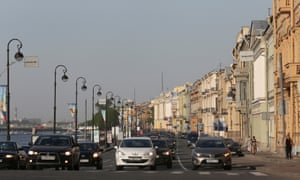
Russian prosecutors have opened an attempted murder investigation after a businessman threw a pedestrian who touched his car into a canal in St Petersburg.
The pedestrian, reportedly handicapped, “accidentally touched the Audi of the 30-year-old businessman with his foot”, prosecutors said in a statement. The driver “got out of his car and punched him in the face before throwing him over the railings into the canal,” the statement said.
The victim, 44, managed to clamber out of the water and was taken to hospital. The driver was later detained and faces 11 years in jail.
—
16 October 2015
The MH17 report
Crash course
An airliner shot down by a missile was a wake-up call for Europeans unprepared for war
The MH17 report is a point of contention in the stand-off between Russia and the West http://econ.st/1VWCfZb
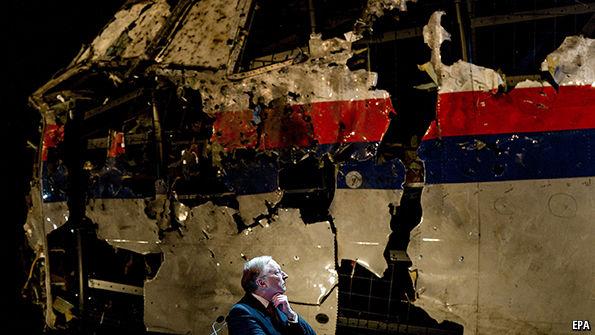
On October 13th the Dutch Safety Board made public the results of a 14-month investigation into the physical cause of MH17’s crash. As expected, it concluded that a Russian-made BUK missile brought the plane down. The report is an exemplar of European technocratic neutrality. The board mapped out a 320-square-kilometre zone from which the missile might have been launched, but did not offer a theory about who fired it. The attempt to allocate blame will come next year, when a separate criminal investigation completes its work. But the safety board’s chairman, Tjibbe Joustra (pictured), told the Dutch newspaper de Volkskrant that the launch area it identified had been controlled by the rebels at the time of the crash.
For all its neutrality, the report is another point of contention in the stand-off between Russia and the West. Russia has accused the investigators of bias, and has relentlessly muddied the waters. The Russian-backed rebels threw up unpredictable obstacles at the crash site. To carry out the investigation and recover its dead citizens, the Dutch government was forced to negotiate patiently while local Ukrainian miners laboured to collect the bodies. In July a proposal for a UN-mandated tribunal to try those responsible was blocked by a Russian veto. In advance of the Dutch report, the Russian company that makes the BUK released a report of its own purporting to show that the missile had been fired from government-controlled territory and that Russia no longer operated that model at the time. (IHS Jane’s Defence Weekly, an authoritative security publication, said Russia still did.)
The struggle to establish guilt has made it clear that, on the day the plane went down, the structures of post-war European security crashed, too. For many across Europe, MH17 showed that the war in Ukraine was more than an incomprehensible bloodbath somewhere far to the east—that the breakdown of a stable security order would have consequences for them as well. “What we forgot is that all kinds of risks don’t fit into the image of a well-organised society,” says Gabriel van den Brink, a professor at Tilburg University and editor of a new book about the meaning of MH17. “What happens if some groups aren’t prepared to follow the rules?”
—
15 October 2015
bellingcat (@bellingcat) | Twitter
How the Dutch Safety Board Proved Russia Faked MH17 Evidence
Eliot Higgins
With the release of the Dutch Safety Board report into the downing of Flight MH17 it is now possible to compare the evidence gathered by the Dutch Safety Board with claims made by the Russian Ministry of Defence in their July 21st 2014 press conference on the downing of Flight MH17. In Bellingcat’s “Russia’s Colin Powell Moment – How the Russian Government’s MH17 Lies Were Exposed” four claims made by the Russian Ministry of Defence during the press conference were examined and shown to either be lies, fabrications, or both. While the Dutch Safety Board report does not cover all aspects of the Russian Ministry of Defence’s July 21st press conference it was still possible to compare the Dutch Safety Board’s conclusions to some of the claims made by the Russian Ministry of Defence.
MH17’s Flight Path
One of the Russian Ministry of Defence’s key claims was that MH17 had been redirected out of its flight corridor, making a significant turn clearly visible on the image they presented of MH17’s flight path, shown below:
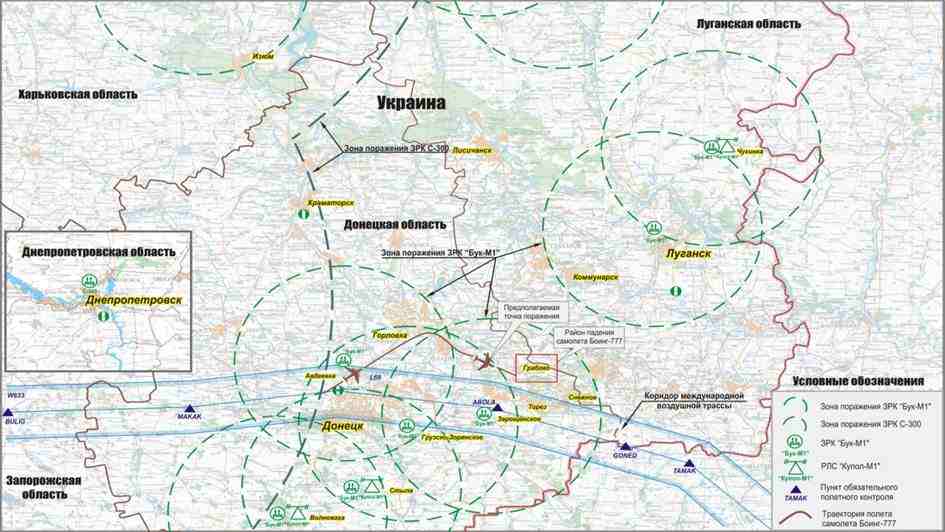
Data from the preliminary Dutch Safety Board report published on September 9th 2014 showed that this claimed flight path was a fabrication, with the following comparison created by Bellingcat clearly showing the difference between the Russian Ministry of Defence claim and the Dutch Safety Board’s findings in their preliminary report:
The below map is from the final Dutch Safety Board report showing the route of Flight MH17, which confirms the route published in the preliminary Dutch Safety Board report:
 This is final confirmation that the Russian Ministry of Defence presented a fake map of Flight MH17’s flight path in their July 21st 2014 press conference, and lied about the flight path during the press conference.
Read more:
—
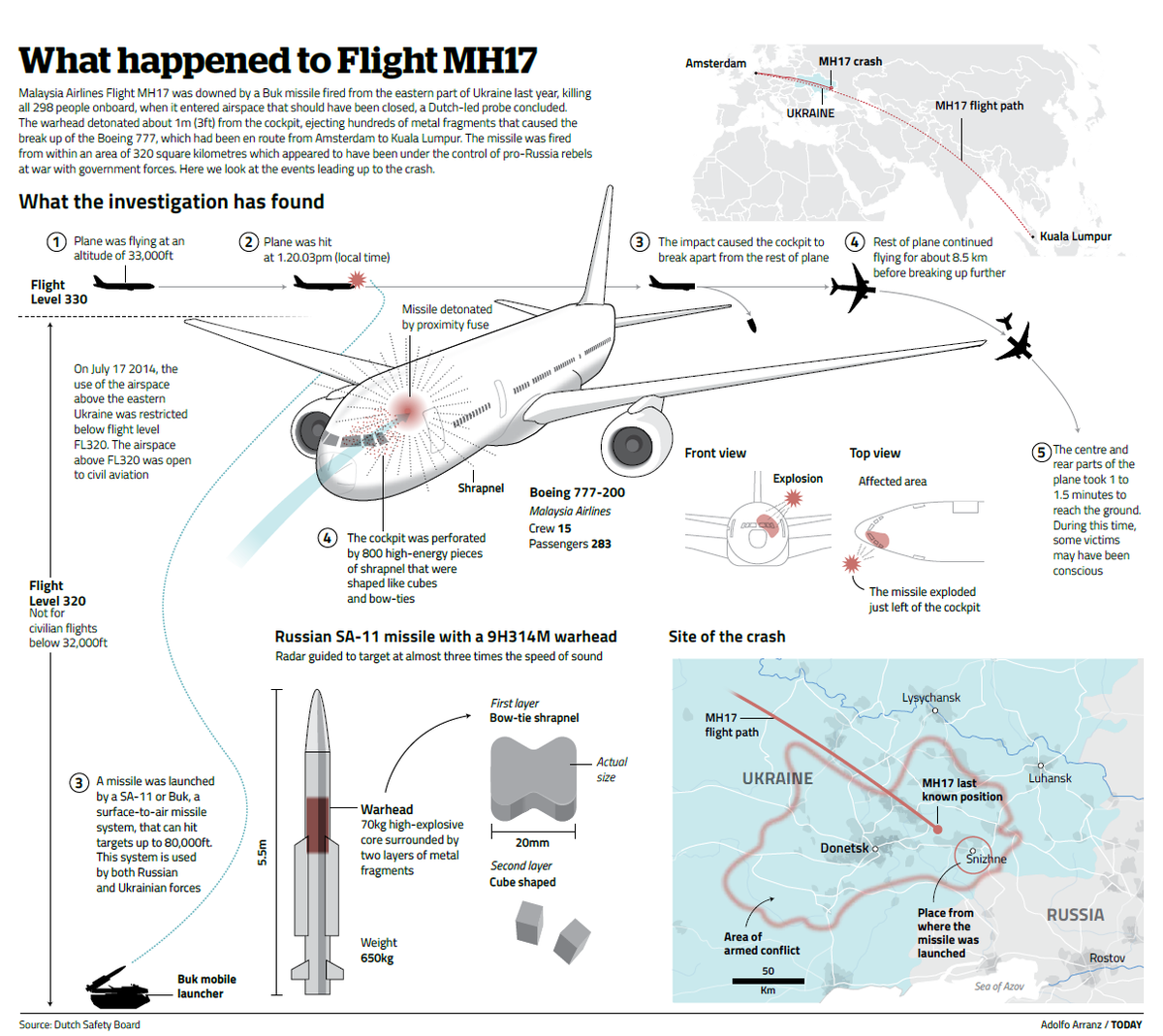
INFOGRAPHIC: What happened to Flight #MH17 http://tdy.sg/1Ndyqr5
—
 weehingthong