
…
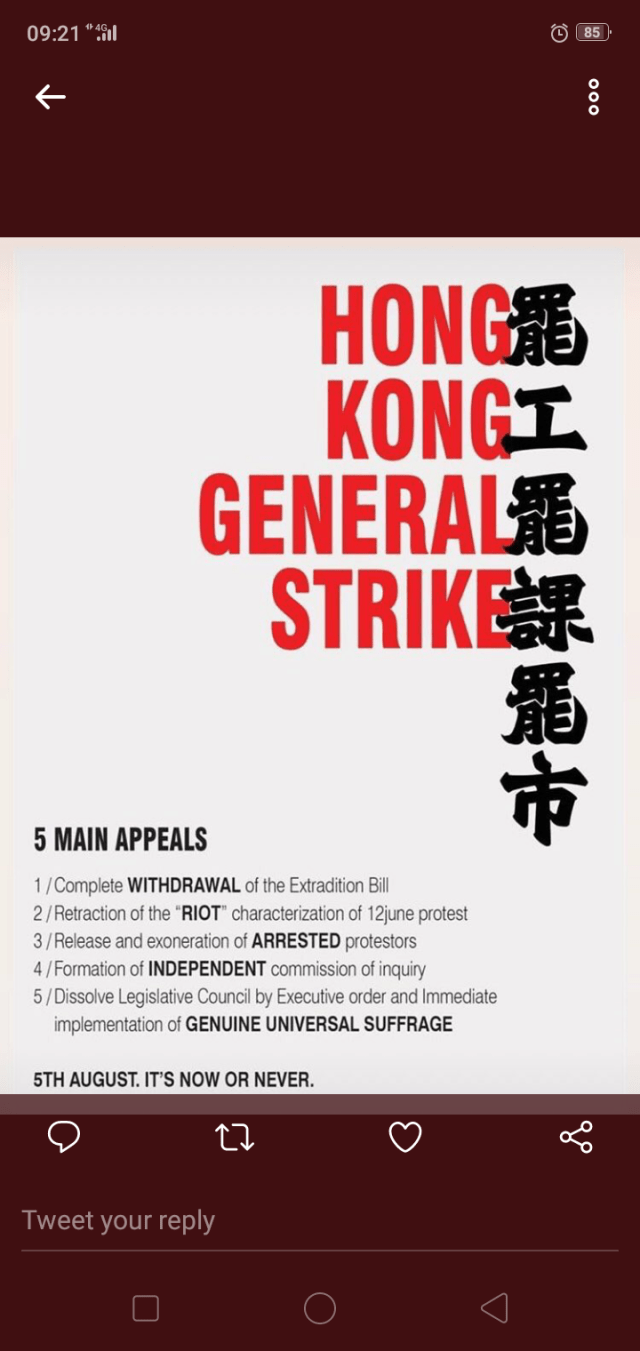
..
Excerpts from:
https://twitter.com/corkyengel/status/1158756644446019584?s=20
In Hong Kong, It’s Now a Revolution
“In Hong Kong, revolution is in the air. What started out as an unexpectedly large demonstration in late April against a piece of legislation—an extradition bill—has become a call for democracy in the territory as well as independence from China and the end of communism on Chinese soil.”
..
In Hong Kong, revolution is in the air. What started out as an unexpectedly large demonstration in late April against a piece of legislation—an extradition bill—has become a call for democracy in the territory as well as independence from China and the end of communism on Chinese soil.
Almost nobody thinks any of these things can happen, but they forget that Chinese rebellions and revolutions often start at the periphery and then work their way to the center. The Qing dynasty of the Manchus, the last imperial reign, unraveled from the edges, as did others.
Hong Kong, perched on the edge of the Asian continent far from the center of communist power in Beijing, may be where the end of Chinese communism begins.
How could the mighty Communist Party of China fall?
Xi Jinping, the Chinese ruler, knows that very few in the rest of China, the “mainland” as it is called, sympathize with the Hong Kong protestors, especially because they challenge “China,” as the party likes to call itself. Yet the demonstrators in Hong Kong have succeeded at pushing their government around, almost at will, forcing Carrie Lam, the chief executive of the Hong Kong Special Administrative Region, to “suspend” consideration of the extradition legislation.
And that is why Xi must be concerned. Mainland residents have grievances of their own, especially now that the economy is crumbling fast, and might become inspired to treat their own leaders roughly.
Hong Kong protestors, worryingly for Xi, seemed determined to spread their provocative message. Recently, they have been targeting mainland tourists to Hong Kong, seeking to inform them of their grievances. Demonstrators have, for instance, gathered in placeswhere Chinese visitors congregate, including a rail station, and have used the AirDrop app to spread protest posters to mainlanders.
.
At the end of that month, Ho-Fung Hung of Johns Hopkins University noted that the authorities then thought they could outlast the protestors but he disagreed with their assessment, believing the demonstrations could last until September, the fifth anniversary of the Umbrella movement, or even to October 1, when Beijing plans to celebrate the seventieth anniversary of the founding of the People’s Republic.
Now, Hung looks prescient. There is no end to the demonstrations, now in their ninth-straight week, in sight.
Sustainability is the key for the protestors if they want to win freedom from China. “They keep saying ‘be like water,’” Michael Yon, the American war correspondent and author, told the National Interest over the weekend, noting young protestors are modeling themselves after martial arts legend Bruce Lee. “I keep telling them be like Poland. Never quit and you can actually be free. Maybe. But never quit.”
Yon, now reporting from the streets in Hong Kong, is on to something. Hong Kong people may be able to inspire just enough disgruntled mainlanders to shake their regime to the ground. If one thing is evident after months of protests, the youthful pro-democracy demonstrators are determined, as are millions of residents of the territory.
In a contest where neither side will concede, anything can happen. Chinese regimes, let us remember, fray at the edges and then sometimes fall apart. It could happen this time as well.
Gordon G. Chang is the author of The Coming Collapse of China. Follow him on Twitter@GordonGChang.
https://nationalinterest.org/feature/hong-kong-it%E2%80%99s-now-revolution-71491
..
The scenes of protest in Hong Kong over the last few months can appear chaotic, filled with throngs of activists and waving umbrellas. But in the undulating waves of people is a well-developed system for moving supplies, providing aid and constructing barricades–all driven by hand signals.
A steady supply chain
Not too far from the clashes, protesters work to get any equipment needed to those on the frontlines facing off against the police. Human chains were observed at many of the marches. Some formed and dispersed quickly, but others were in place for some time, with protesters swapping positions as needed.
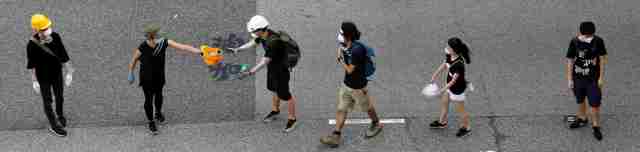 Protesters pass a helmet to the frontline on July 1, 2019. REUTERS/Tyrone Siu
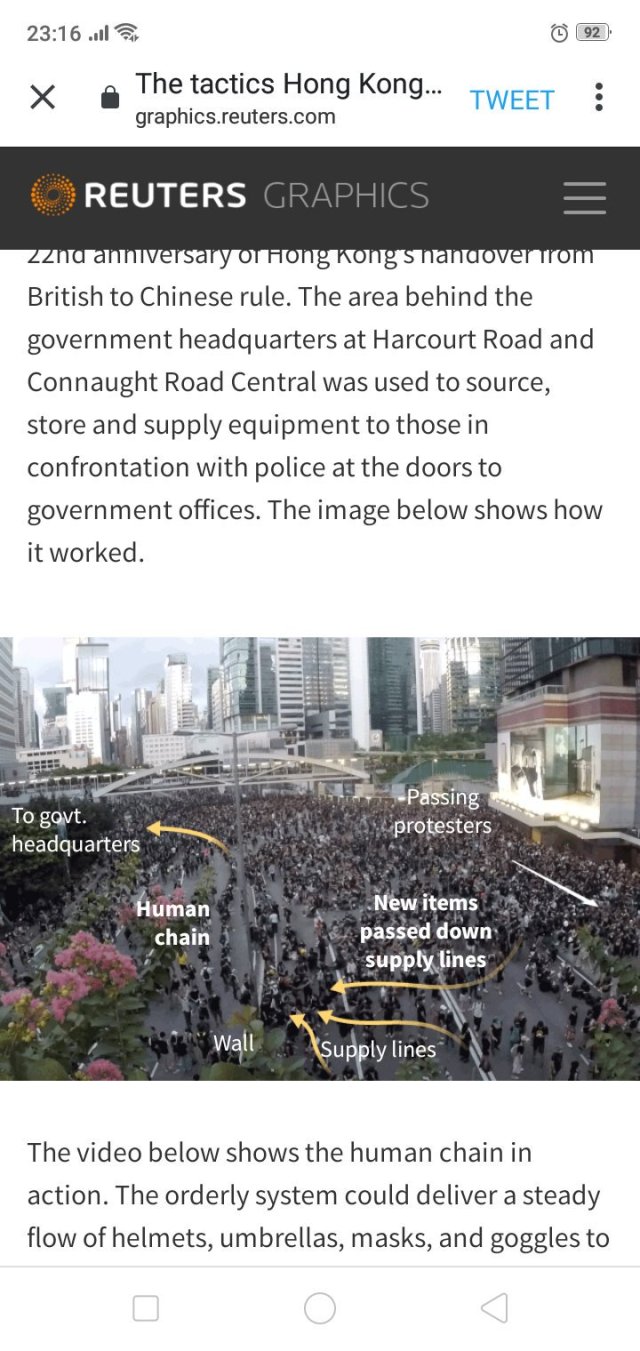
A supply system swung into action on July 1, the 22nd anniversary of Hong Kong’s handover from British to Chinese rule. The area behind the government headquarters at Harcourt Road and Connaught Road Central was used to source, store and supply equipment to those in confrontation with police at the doors to government offices. The image below shows how it worked.
.
.
For the whole article:
https://graphics.reuters.com/HONGKONG-EXTRADITIONS-TACTICS/0100B0790FL/index.html
..
https://twitter.com/PenguinSix/status/1158756586392866816?s=20
..
https://twitter.com/teezy501/status/1158756596421468167?s=20
..
..
https://twitter.com/karenklcheung/status/1158572397903007744?s=20
..
..
..
..
..
..
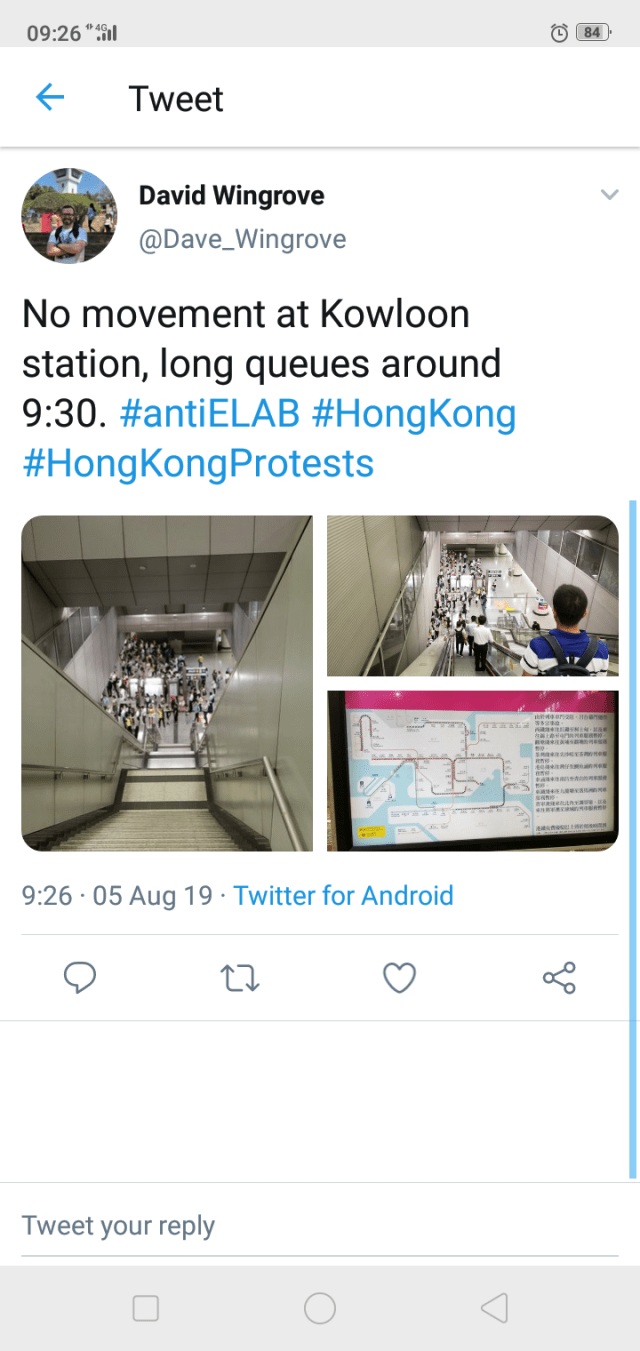
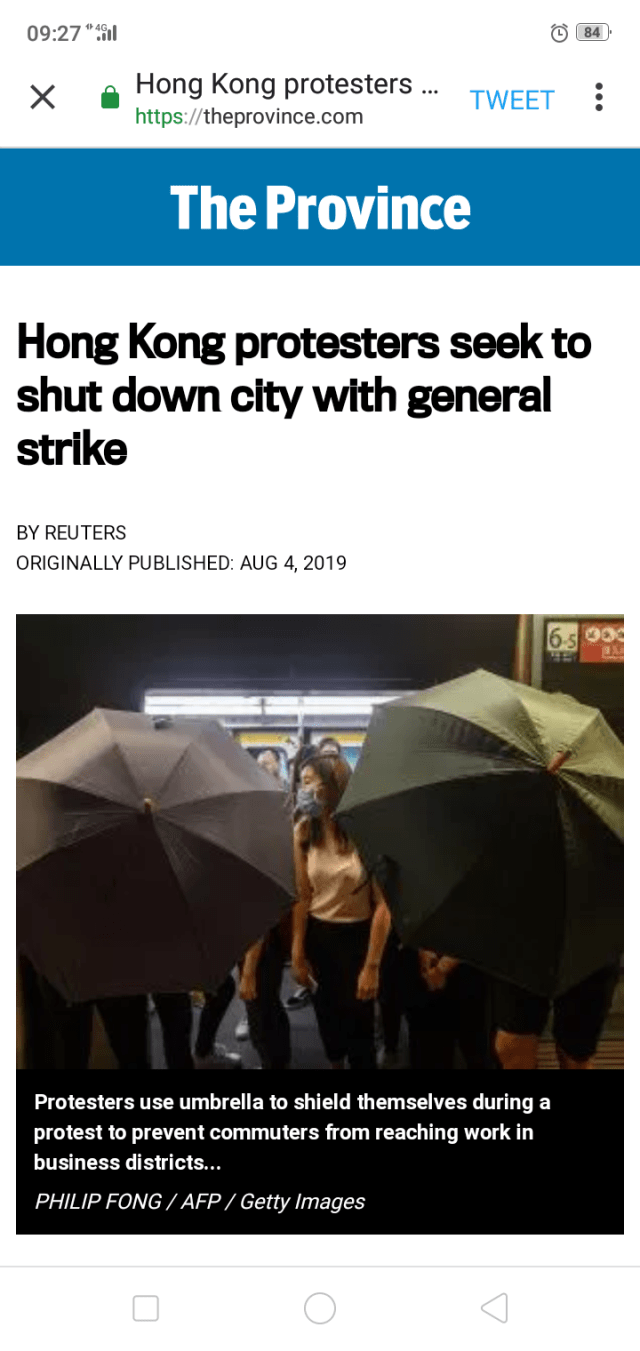
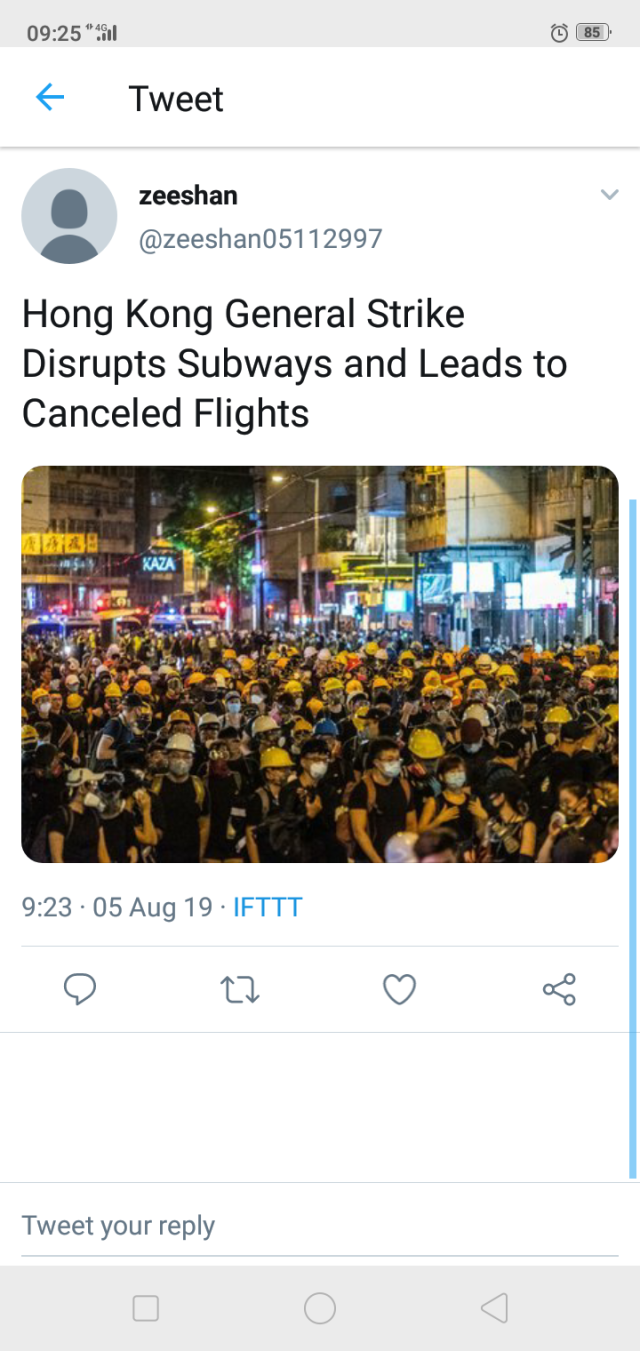
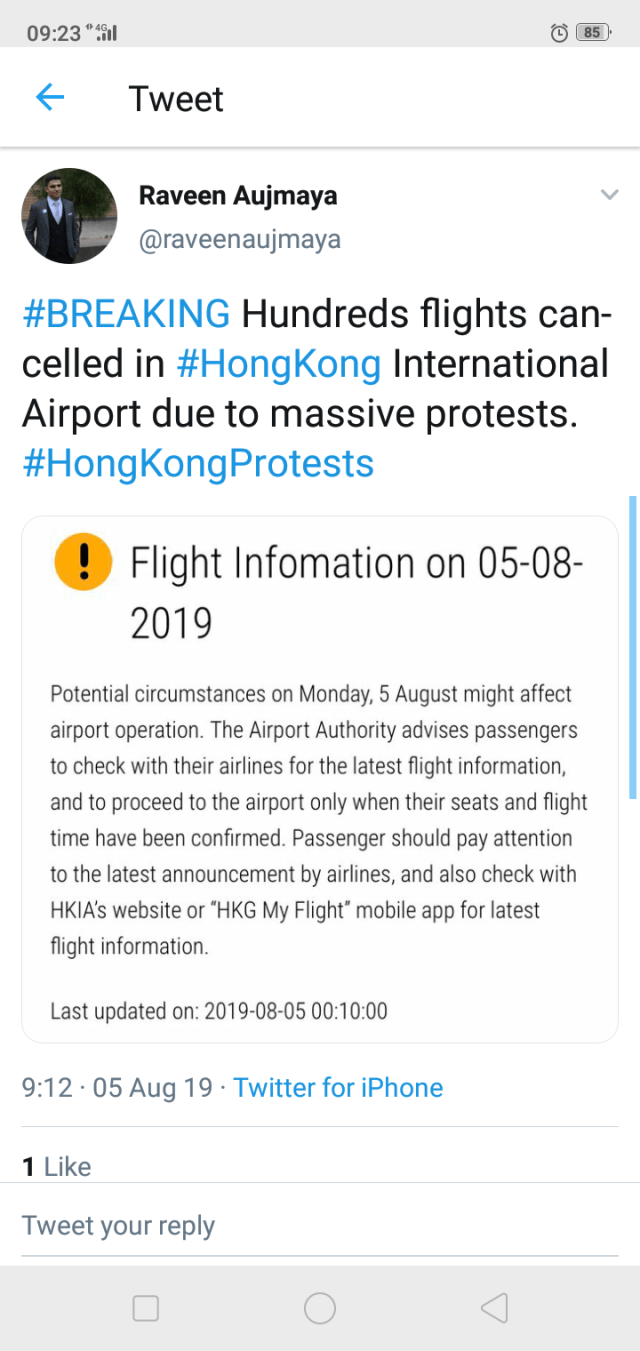
China reiterated support for Hong Kong leader Carrie Lam on Tuesday as the financial hub cleaned up from a general strike that led to a day of traffic chaos, mob violence, tear gas and flight cancellations.
A front-page commentary carried on the People’s Daily, the Communist Party’s flagship newspaper, said the central government “resolutely” supports Lam as the city’s leader. China would absolutely not tolerate violent protesters, it said, adding that Hong Kong’s top priority was to punish criminal acts and restore social order.
..
..
…
.
.
..
..

..

..
 weehingthong