
—
—
WHO links processed meat consumption to cancer
Twenty-year-long study finds hot dogs, bacon and other processed meats raise risk of colon, stomach and other cancers.
The American Cancer Society has long urged people to eat less processed and red meat.
http://www.aljazeera.com/news/2015/10/links-processed-meat-consumption-cancer-151026162234328.html
—
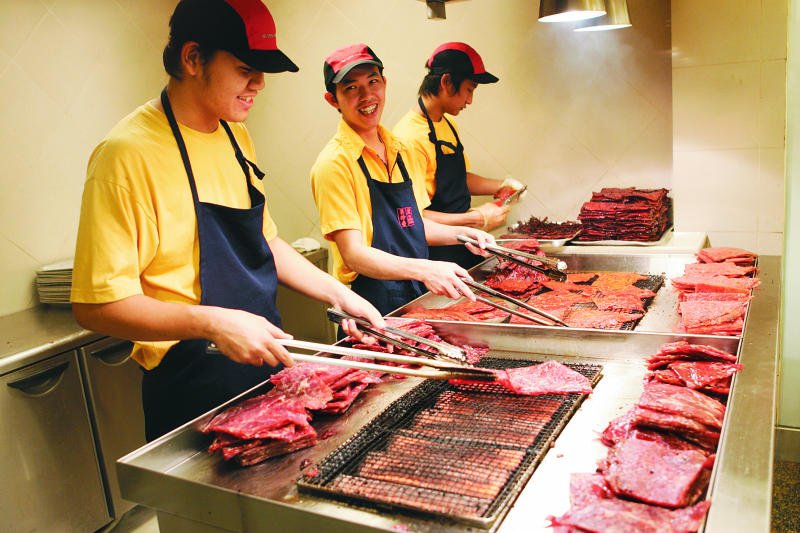
1. Eat as little processed meat such as bacon, ham and other processed meat (such as Chinese sausage and bak kwa) as possible.
2. Reduce eating of red meat (beef, pork and mutton).
3. Adopt general guidelines for healthy living: No smoking, Regular exercise and eat more fruits and vegetables.
4. Keep your body weight
Remember: Cancer has multiple causes.
—
Bak kwa, lup cheong also processed meat, but moderation is key: Doctors http://bit.ly/1GxPRDx @TODAYonline
—
How to have your meat and eat it, too
INFOGRAPHIC: #Cancer-causing meat — how to have your meat and eat it, too. Details: http://bit.ly/1WiLNZn

SINGAPORE — Eat as little bacon, ham and other processed meat as possible, and observe general guidelines for healthy living that include not smoking, exercising and eating more fruits and vegetables.
This was the advice of experts in Singapore, in the wake of a World Health Organization agency saying on Monday (Oct 26) that processed meat causes colorectal cancer. The 22 experts from the International Agency for Research on Cancer (IARC) also said red meat probably causes cancer.
The agency reviewed over 800 studies before concluding that each 50-gram portion of processed meat eaten daily increases the risk of colorectal cancer by 18 per cent. The evidence showing that red meat — which includes beef, pork and mutton — causes colorectal cancer is limited, but red meat has also been linked to pancreatic cancer and prostate cancer.
While consumption of processed meat should be kept to a minimum where possible, it is important to remember that cancer has multiple causes, said Dr Raymond Ng of the National Cancer Centre Singapore.
“Healthy living means avoiding smoking, eating more fruits and vegetables, exercising and keeping one’s body weight within the ideal range, rather than just specifically changing one particular dietary habit,” said Dr Ng, a senior consultant medical oncologist.
Experts said there are no specific guidelines on how much processed or red meat to eat. “It’s a continuous curve, there is no cut-off beyond which it is safe or dangerous,” said Dr Wong Seng Weng, consultant medical oncologist at The Cancer Centre.
He also felt it was “reasonable to extrapolate” the IARC’s classification of processed meat to other processed meats found in Singapore, such as Chinese sausage and bak kwa (marinated, sliced barbecued pork commonly eaten during Chinese New Year).
“The key is moderation in everything, so having two pieces of bacon once in a while is still acceptable,” said Dr Sue Lo, director and senior consultant oncologist from The Harley Street Heart and Cancer Centre.
According to the National Nutrition Survey 2010, an average Singaporean adult consumes about 10g of processed meat a day, with those aged 18 to 29 years old consuming more — 20g a day, equivalent to a hot dog.
“Such levels of consumption over time can be a cause of concern. However, we note that this is considerably lower than the amount cited in the WHO report (50 grams),” a Health Promotion Board spokesperson said. The board recommends no more than two servings of processed meat a week, with each serving equivalent to a hot dog.
http://www.todayonline.com/singapore/how-have-your-meat-and-eat-it-too
—
WHO links processed meat consumption to cancer
Twenty-year-long study finds hot dogs, bacon and other processed meats raise risk of colon, stomach and other cancers.
WHO: Processed meats raise the risk of colon, stomach and other cancers http://aje.io/pva8

Hot dogs, bacon and other processed meats raise the risk of colon, stomach and other cancers, the World Health Organization (WHO) has said.
Monday’s announcement follows studies which looked at more than a dozen types of cancer in populations with diverse diets over the past 20 years.
The findings back what many doctors have been warning for years, and will anger the meat industry which has been rallying against putting processed meats in the same danger category as smoking or asbestos.
A group of 22 scientists from the WHO’s International Agency for Research on Cancer (IARC) in Lyon, France, evaluated more than 800 studies from several continents about meat and cancer.
Based on the results, the IARC classified processed meat as “carcinogenic to humans”.
With regard to red meat, the report said it contained some important nutrients, but still labelled it “probably carcinogenic”, with links to colon, prostate and pancreatic cancers.
The agency said it did not have enough data to define how much processed meat is dangerous, but said the risk grows with the amount consumed.
Analysis of 10 of the studies suggested that a 50-gramme portion of processed meat daily increases the risk of colorectal cancer over a lifetime by about 18 percent.
The WHO’s findings can influence public health recommendations around the globe.
—
—
 weehingthong