
_____________________________________________________________________
MOSQUITOES ARE HORRIBLE, TERRIBLE LITTLE BLOODSUCKERS!
They bite you, and suck your blood. In return, they give you disease! They practise what we call the give-and-take principle: they give you disease when they take your blood! Examples are malaria and dengue fever.
THE MOSQUITO IS ALSO RESPONSIBLE FOR ELEPHANTIASIS
What is Elephantiasis?
By Dr Ananya Mandal, MD
Elephantiasis refers to a parasitic infection that causes extreme swelling in the arms and legs.
The disease is caused by the filarial worm, which is transmitted form human to human via the female mosquito when it takes a blood meal. The parasite grows into an adult worm that lives in the lymphatic system of humans.
(http://www.news-medical.net/health/Elephantiasis-What-is-Elephantiasis.aspx)
…
Obese M’sian man with elephantiasis has to lose 100kg before he can have operation for his leg

Obese M’sian man with elephantiasis has to lose 100kg before he can have operation for his leg http://ow.ly/FsRW6

His right leg has more than doubled its size, but doctors cannot treat it because he is too fat.
Mr Ahmad Khalid Salleh, who weighs a whopping 241kg, needs to lose weight before doctors can operate on him safely, said Dr Pok Eng Hong.
The consultant surgeon at Universiti Malaya Medical Centre (UMMC) in Malaysia said: “Ahmad Khalid needs to reduce more than 100kg before we can treat his leg.”
The obese Malaysian man is suffering from elephantiasis, a parasitic infection that causes extreme swelling.
…
Mr Ahmad Khalid’s trouble began two months after a jungle trek in 2009.
He had fever for a month and his leg began to swell, making it difficult for him to walk.
He has had to quit his job as a telecommunications salesman due to his condition.
http://www.tnp.sg/news/doctors-cant-treat-obese-man-elephantiasis-until-he-loses-100kg
—
They cause malaria and dengue fever, among other diseases.
*219 million cases of malaria are estimated to occur around the world each year.
*Dengue fever? Around 50–100 million people are infected yearly
—–
Dengue is spread by the Aedes aegypti mosquito which breeds in stagnant water and other damp spots.
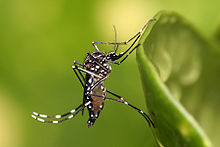
http://en.wikipedia.org/wiki/Aedes_aegypti
…
Star
Friday December 27, 2013 MYT 9:33:25 PM
Denggi deaths up by 151%
PUTRAJAYA: Dengue fever killed 88 victims up to Dec 21, an increase of 151 per cent from the 35 cases during the same period last year.
Malacca 9 dead
Kuala Lumpur and Putrajaya 8
Penang 7
Perak 4
Sarawak 4
Sabah 4
Kelantan 2
Pahang 2
Perlis, Kedah and Negeri Sembilan 1 each
—
Malaysians should be more alarmed about the high rates of dengue cases and fatalities in the country since number of deaths caused by Dengue in 2013 jumped by 137% from the year before.
…
Star
Saturday December 21, 2013 MYT 8:30:17 AM
Dengue deaths rising – red alert
PETALING JAYA: While the thought of contracting H1N1 may cause alarm, figures show that a deadlier killer is on the rise – dengue.
While just two people died from H1N1 this year, dengue has already claimed 83 people.
As of Dec 14, dengue cases rose by a whopping 87.5% (18,299), with 39,222 cases recorded this year compared to 20,923 last year.
The number of deaths, meanwhile, jumped by 137% to 83 deaths from 48 deaths in the same time period.
Health Ministry disease control division director Dr Chong Chee Kheong said many people still viewed dengue as a mild disease despite the fact that 10% to 15% of dengue cases were severe.

Dengue deaths rising – red alert
—
Malaysian Insider
Dengue deaths double in Malaysia, says Health Ministry
November 05, 2013

A Malaysian health official has warned citizens to take steps to eliminate mosquito breeding spots as dengue fever cases have spiked.
The number of reported cases of the infection, which causes severe fever, headaches and joint pain and can trigger fatal haemorrhaging and death, has soared compared to last year, and deaths have doubled.
Between January and late October, 28,200 cases and 60 deaths were recorded, according to government statistics.
There were 17,800 cases and 29 deaths during the same period last year.
http://www.themalaysianinsider.com/malaysia/article/dengue-casualties-double-in-malaysia
—
YAHOO! NEWS SINGAPORE
Malaysia warns on dengue as deaths spike
 AFP News – 22 minutes ago
A Malaysian health official on Monday warned citizens to take steps to eliminate mosquito breeding spots as dengue fever cases have spiked.
The number of reported cases of the infection, which causes severe fever, headaches and joint pain and can trigger fatal haemorrhaging and death, has soared compared to last year, and deaths have doubled.
Between January and late October, 28,200 cases and 60 deaths were recorded, according to government statistics.
There were 17,800 cases and 29 deaths during the same period last year.
Officials have said a key factor has been frequent heavy downpours in recent weeks.
…
In Singapore, which borders Malaysia, more than 19,000 people have been infected this year, according to a government website tracking the problem.
Five have died.
The previous high for number of cases in Singapore came in 2005, when 13,984 infections were recorded, according to official data. Twenty-five people died that year.
http://sg.news.yahoo.com/malaysia-warns-dengue-deaths-spike-081108663.html
—
Published on Jul 19, 2013
July 16, 2013
A vehicle from the health department was seen along Jalan Rosmerah 4/8, Taman Johor Jaya on July 16. When CJMY went up to the health officer at the scene, he declined to be interviewed, but he told CJMY that there were two new cases of dengue along Jalan Rosmerah 4/10 and the health department had came to fog the area.
CJMY spoke to Noreffaziela Binti Miskan, a personnel from the Jabatan Kesihatan in Jalan Abdul Samad. According to her there were more than twenty dengue infested areas in Johor Bahru, and the cases reported for the period from January to June 2013 were 1279 cases.
She said that when there is more than one case reported in a certain area the health department will do a ULV around 4 to 5 in the morning, and fogging with malathion golkilath at 6 to 7 in the evening.
According to Liow Chee Yong, a 56 year old hair dresser, her two children aged 21 and 24 caught dengue but could not be admitted to the Sultan Ismail Hospital because their palates count was above 70. She said the hospital will only admit cases whose palates counts are 40 and below.
She said she finally admitted her children to a private hospital instead of waiting for the hospital. She said the areas where she heard were many cases of dengue were Masai, Permas Jaya and Johor Jaya.
According to Doreen Tay, a sale promoter by profession, she did not even know she had dengue because she had no symptoms except for fever. She admitted herself into a private hospital when her palates count went down to 55. She mentioned that her doctor told her that is not serious, and a serious case would be below 20.
Doreen Tay said that she heard of many cases in Taman Perling, Taman Pelangi and Taman Johor Jaya. She mentioned that her friend’s brother and family were admitted to a private hospital for dengue and their hospital bills came to RM18,000.00
CJMY saw many buntings and a banner around Taman Desa Harmoni and Taman Johor Jaya.
Video by: Christine Leong, Citizen Journalists Malaysia
—
—
 STOMP
STOMP How to stop a mosquito bite itching and other useful tips you wish you knew earlierpic.twitter.com/ssJnLaMlqa

This article is contributed by the STOMP Team.
Put a spoon in hot water, and when it is heated, put the spoon against the itchy part for a few minutes.
The logic behind this simple tip is when a mosquito bites a person, it injects a protein under the skin and this protein causes the itchiness. The heat from the spoon breaks down the protein.
—–
—
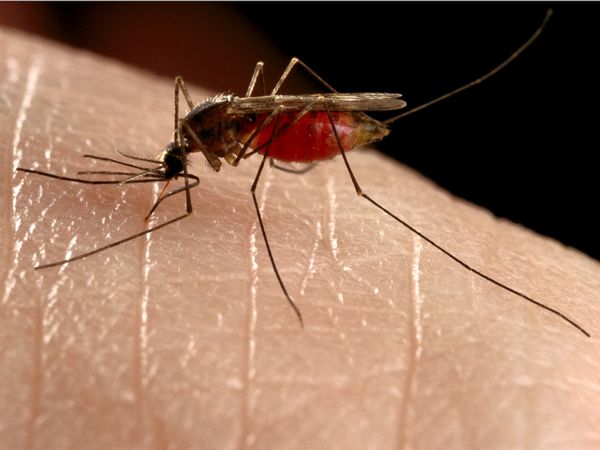
A mosquito sucking blood
Photograph by Darlyne A. Murawski
http://animals.nationalgeographic.com/animals/bugs/mosquito/
—
They bite you, and suck your blood. In return, they give you disease! They practise what we call the give-and-take principle: they give you disease when they take your blood!
They cause malaria and dengue fever, among other diseases.
*219 million cases of malaria are estimated to occur around the world each year.
*Dengue fever? Around 50–100 million people are infected yearly
—
Malaria: Deadliest Human Parasite on Earth

Malaria kills approx. 660,000 people each year. In honor of World Malaria Day (April 24), this board explores the facts around, the fight against, and the future of malaria.
Malaria: Deadliest Human Parasite on Earth | Science | Learnist
—
—
Are You a Mosquito Magnet?
Some people are magnets of mosquitoes: they go for them all the time. Yes, mosquitoes prefer some people to others.
I am one of these unfortunate people!
—
Are You a Mosquito Magnet?
By Elizabeth Heubeck
WebMD Feature
Mosquitoes do exhibit blood-sucking preferences, say the experts. “One in 10 people are highly attractive to mosquitoes,” reports Jerry Butler, PhD, professor emeritus at the University of Florida. But it’s not dinner they’re sucking out of you. Female mosquitoes — males do not bite people — need human blood to develop fertile eggs. And apparently, not just anyone’s will do.
Although researchers have yet to pinpoint what mosquitoes consider an ideal hunk of human flesh, the hunt is on.
…
“People with high concentrations of steroids or cholesterol on their skin surface attract mosquitoes,” Butler tells WebMD. That doesn’t necessarily mean that mosquitoes prey on people with higher overall levels of cholesterol, Butler explains. These people simply may be more efficient at processing cholesterol, the byproducts of which remain on the skin’s surface.
Mosquitoes also target people who produce excess amounts of certain acids, such as uric acid, explains entomologist John Edman, PhD, spokesman for the Entomological Society of America. These substances can trigger mosquitoes’ sense of smell, luring them to land on unsuspecting victims.
Interesting, isn’t it? Find out more: Click on
Mosquito Magnets: Who/What Attracts Mosquitoes? – WebMD
—–
MOSQUITOES (From Wikipedia)
The mosquitoes are a family of small, midge-like flies: the Culicidae. Most are a nuisance because they consume blood from living vertebrates, including humans. The females of many species of mosquitoes are blood-eating pests. In feeding on blood, some of them transmit extremely harmful human and livestock diseases, such as malaria, yellow fever and filariasis.
Some authorities argue accordingly that mosquitoes are the most dangerous animals on Earth.
*MOSQUITOES AND DISEASE
THE AEDES AEGYPTI SPREAD YELLOW FEVER, DENGUE FEVER AND CHIKUNGUNYA.
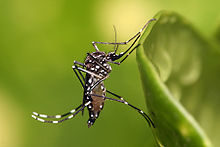
MOSQUITOES AND DENGUE FEVER

Dengue Fever Cases Increase in Kuala Lumpur, Malaysia in …
—
Dengue fever, a viral infection endemic to tropical and subtropical climates, is characterized by high fever, body aches and intense headache. In Singapore, the virus is transmitted to humans mainly by the female Aedes aegypti mosquito, an urban-dwelling pest that lays its eggs in stagnant water.
No vaccine or specific treatment is available for dengue, although severe cases may require patients to get intravenous rehydration to ensure adequate levels of body fluid. About 500,000 people with severe dengue require hospitalization globally each year, of which about 2.5% will die, according to the World Health Organization. But early detection and access to medical care can bring fatality rates below 1%.
http://online.wsj.com/article/SB10001424127887324743704578446162122159222.html
—–
Malaysian Insider
600 dengue cases so far, and Selangor, JB and KL are worst affected
More than 600 cases of dengue fever were reported nationwide in the first six months of this year, said Health Minister Datuk Seri Dr S. Subramaniam in Penang today.
—–
The Wall Street Journal
Dengue Fever on the Rise in Singapore
SINGAPORE—A diminutive pest is threatening Singapore with an outsize bite, bringing this city-state to the cusp of its worst-yet tropical disease outbreak.
The aedes mosquito, the carrier of the potentially fatal dengue fever, has been a constant nuisance for this Southeast Asian city-state. But the threat looms unusually large this year, and health officials are urging residents to take extra precautions. So far this year, Singapore’s health ministry has recorded more dengue cases than the 4,632 reported in the whole of 2012.
Though there have been no deaths, weekly counts rose to 510 cases in the week that ended April 20, a new peak for 2013 and the highest since Singapore’s worst dengue outbreak in 2005.
Singapore is entering its peak dengue season, from May to October, in which warmer temperatures help the dengue virus multiply faster. Health officials are concerned that weekly cases could jump above the record high of 713, or even breach the 1,000 mark.
http://online.wsj.com/article/SB10001424127887324743704578446162122159222.html
—
MOSQUITOES AND MALARIA
THE ANOPHELES SPREAD MALARIA.
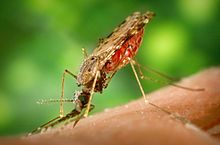
Anhopheles albimanus mosquito feeding on a human arm – this mosquito is a vector of malaria, and mosquito control is a very effective way of reducing the incidence of malaria.
WORLD HEALTH ORGANIZATION (WHO)
Malaria is caused by a parasite called Plasmodium, which is transmitted via the bites of infected mosquitoes. In the human body, the parasites multiply in the liver, and then infect red blood cells.
Symptoms of malaria include fever, headache, and vomiting, and usually appear between 10 and 15 days after the mosquito bite. If not treated, malaria can quickly become life-threatening by disrupting the blood supply to vital organs. In many parts of the world, the parasites have developed resistance to a number of malaria medicines.
Key interventions to control malaria include: prompt and effective treatment with artemisinin-based combination therapies; use of insecticidal nets by people at risk; and indoor residual spraying with insecticide to control the vector mosquitoes.
Malaria cases
219 million cases of malaria are estimated to occur around the world each year.
Malaria deaths
660,000 deaths occur each year, mostly in children under five years of age.
http://www.who.int/topics/malaria/en/
—–
THERE MAY BE A MALARIA VACCINE…
Michael Good, from Queensland’s Griffith University, said he believed it was the first time that a vaccine had been shown to protect against more that two strains of malaria in mice.
Malaysian Insider
Australian researchers close in on malaria vaccine
Australian researchers said today they were closing in on a potential vaccine against malaria, with a study showing their treatment had protected mice against several strains of the disease.
Michael Good, from Queensland’s Griffith University, said the vaccine led to naturally existing white blood cells, or T-cells, attacking the potentially deadly malaria parasite which lives in red blood cells.
“A single vaccination induced profound immunity to different malaria parasite species,” the study, published today in the Journal of Clinical Investigation, states.
Good said the team’s research was focused on inducing the white blood cells to attack the parasite, whatever the malaria strain.
“The T-cells (white blood cells), when they’re induced to kill malaria, can recognise proteins throughout the parasite, even internal proteins in the parasite,” he said.
“So that’s where we think the novel aspect is: we’ve been able to induce a form of immune response which can recognise molecules in the parasite which are present in every single strain.”
http://www.themalaysianinsider.com/world/article/australian-researchers-close-in-on-malaria-vaccine/
—————————————————————–
 weehingthong
Pingback: DENGUE ALERT 2014! | weehingthong